





Description
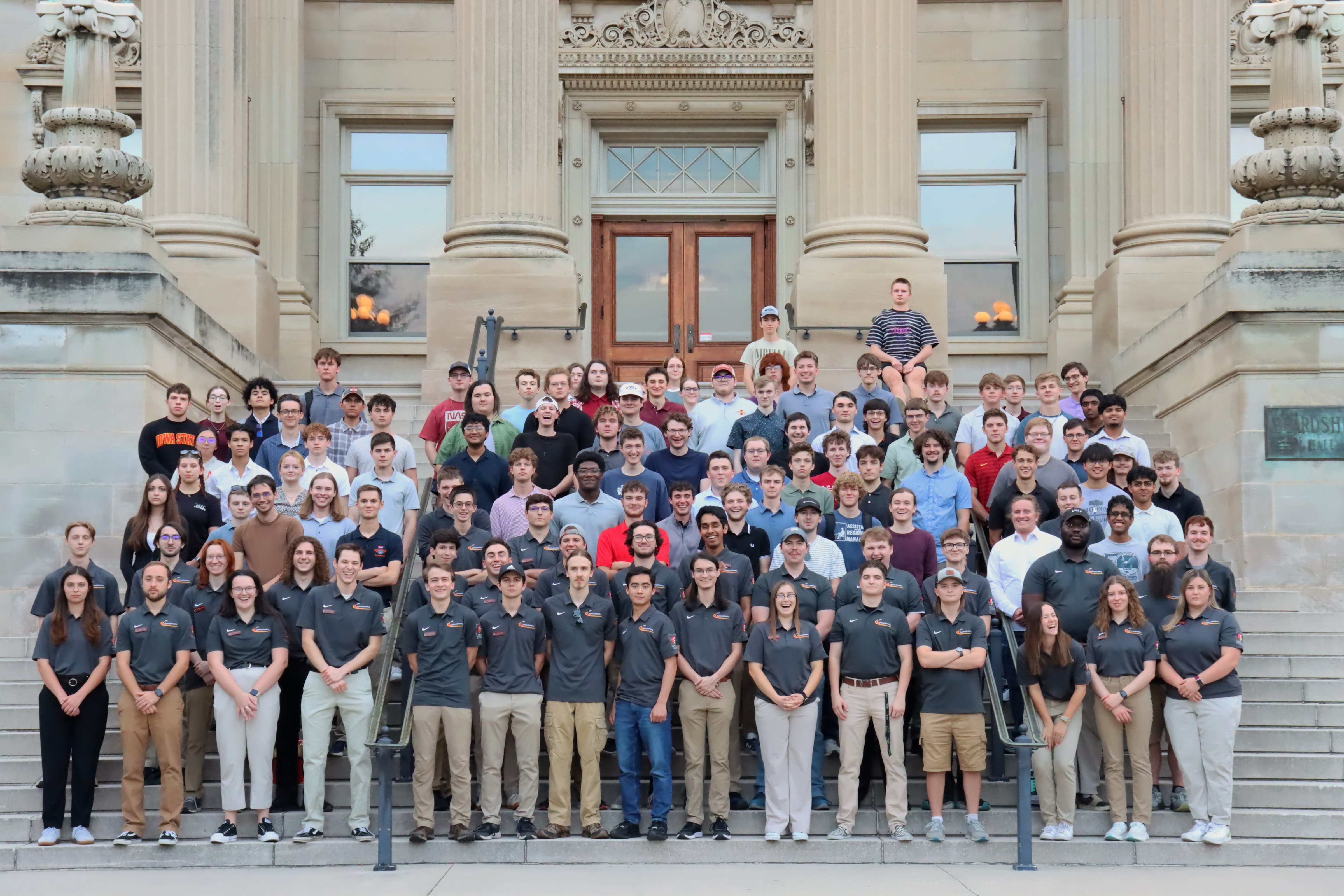
Cyclone Rocketry's 2025-2026 Team
Who We Are
Cyclone Rocketry is Iowa State’s high-powered rocketry team, a multidisciplinary group that competes in the International Rocket Engineering Competition (IREC), formerly known as the Spaceport America Cup (SAC), the world’s largest intercollegiate rocket engineering competition.
Our mission is to educate, challenge, and inspire Iowa State students, community members, and future generations about rocketry, science, engineering, and space.
Through rocket design, manufacture, testing, and flight, Cyclone Rocketry provides valuable hands-on exposure to rocket engineering, an invaluable opportunity to gain experience outside the classroom in this engineering field. Team members participate in all the key steps of a complete engineering project, providing practical knowledge, fostering leadership development, and building modern communication skills.
Click here to visit our website!
Click here to view our Youtube channel!
Click here to visit our Instagram!
History
The team was founded in the fall of 2017 with the goal of competing in SAC 2018. Within our short history, the team has been awarded the Iowa State Newcomer Club of the Year and Outstanding Achievement awards by the university.
Each year, we research, design, manufacture, test, and fly a new competition rocket. Cyclone Rocketry launched Invictus at SAC 2018 and Nova Somnium at SAC 2019. Unfortunately, the competition was canceled in 2020 and 2021 due to the pandemic. However, Cyclone Rocketry completed and flew Ortu Solis in 2020 and Renegade in 2021. The year 2022 marked the return of Cyclone Rocketry to the Spaceport America Cup with Imperator, which also featured Cyclone Rocketry's first student-developed rocket motor for competition. In 2023, Intrepid experienced a shred at roughly 3,000 ft above ground level, while in 2024, Vesta experienced instability during flight and unfortunately did not reach 30,000 ft. Building from our failures, this past year, Cyclone Rocketry achieved a club altitude and speed record on our student developed 30k test vehicle and had a successful static fire of the club's first hybrid rocket motor. Our rocket Selene flew at IREC 2025, but did not feature the hybrid motor. In 2026, Cyclone Rocketry is continuing its push for the first flight of a student developed hybrid motor. Our rocket, Hyperion, is set to fly at IREC 2026 featuring a hybrid motor, as well as a student developed airframe, avionics, payload, parachute, and metal systems developed and machined in-house.
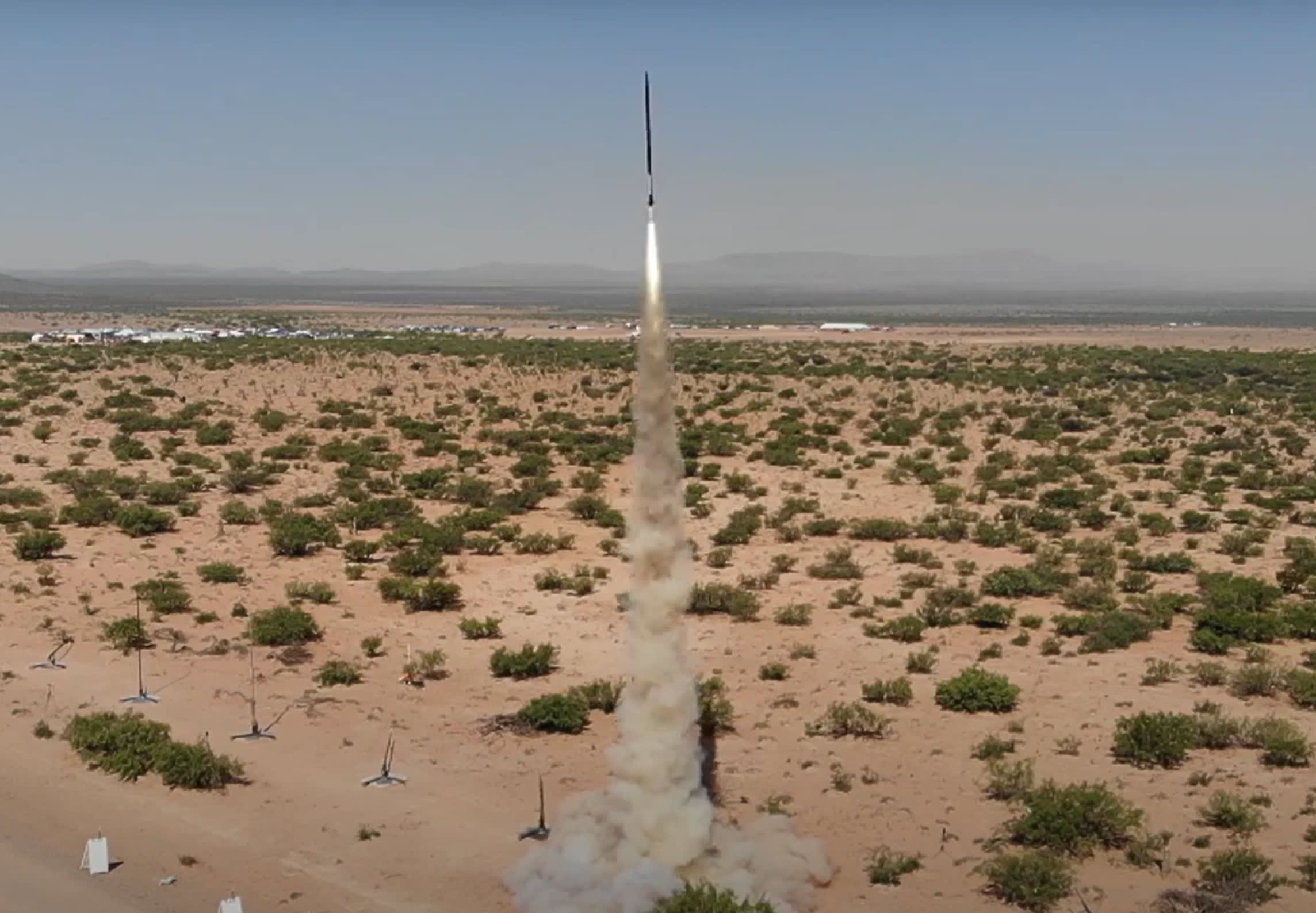
Nova Somnium taking off at the 2019 Spaceport America Cup
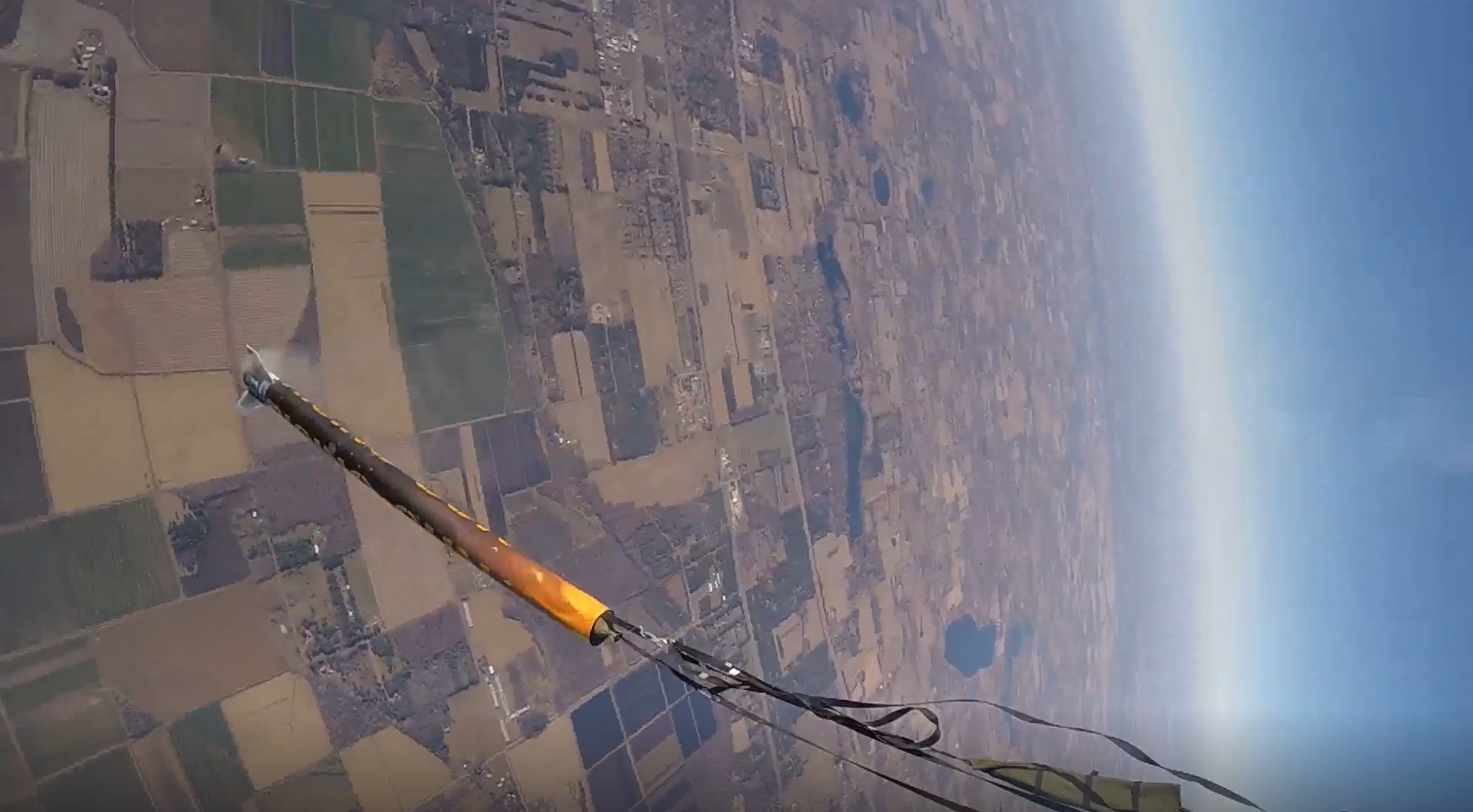
Ortu Solis thousands of feet in the air above North Branch, MN shortly after apogee
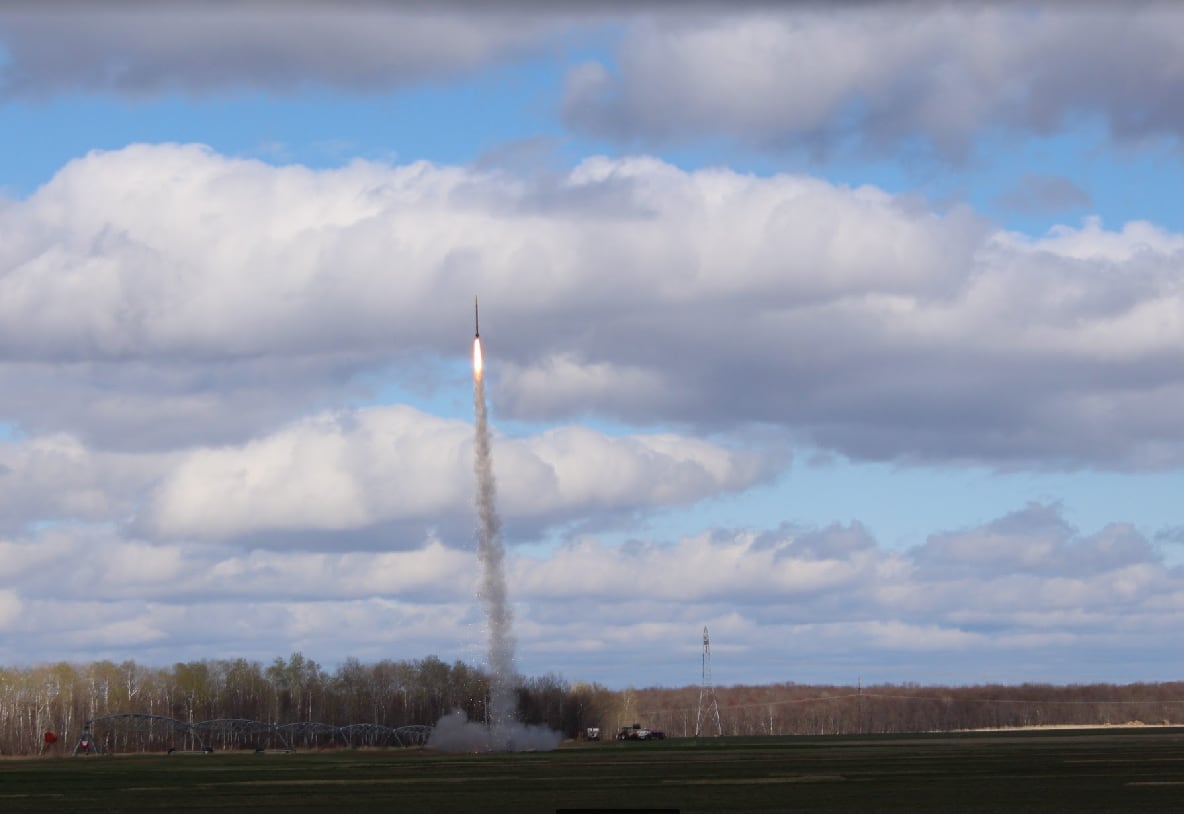 Renegade lifting off at North Branch, MN in 2021
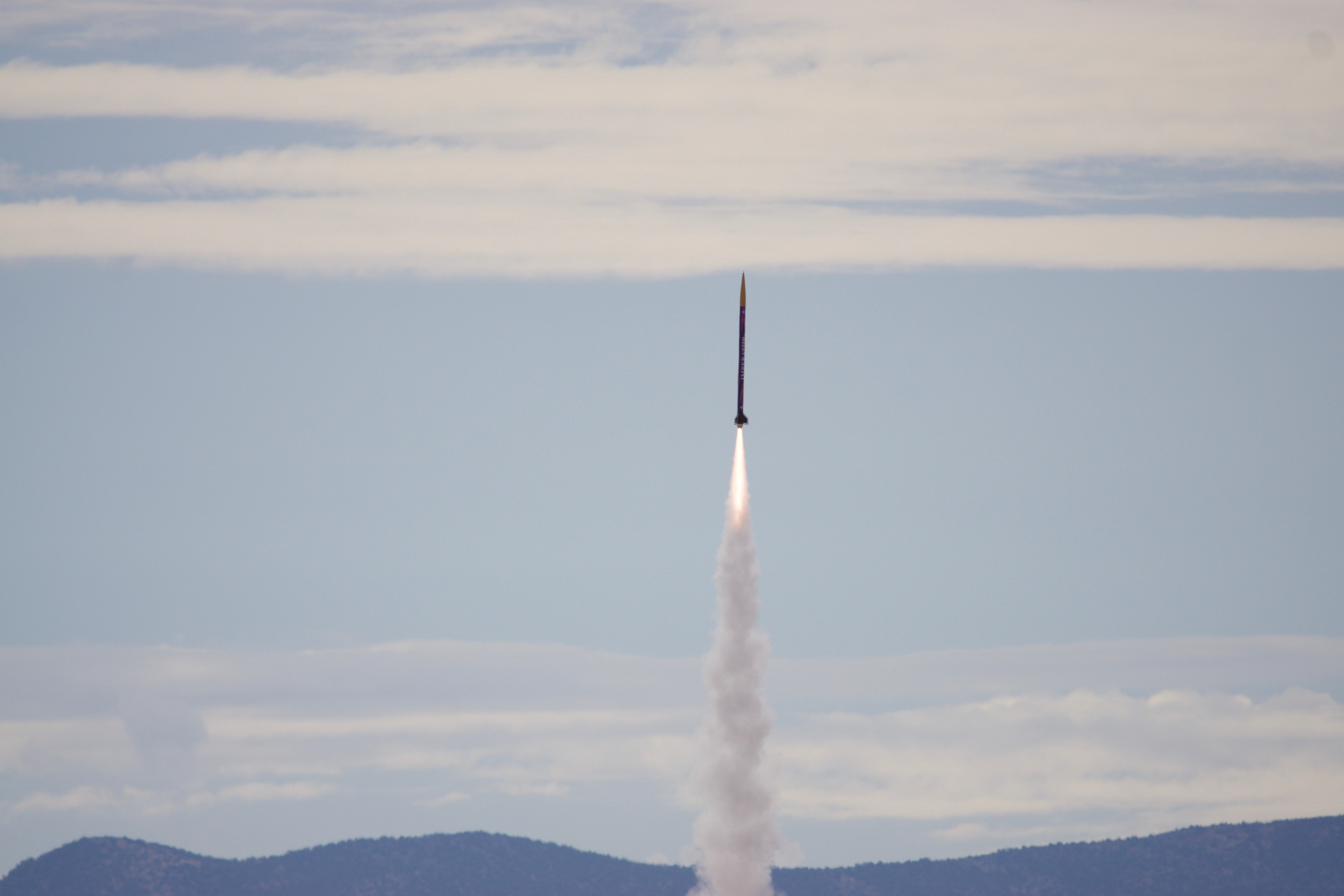
Imperator just after liftoff at the Spaceport America Cup in 2022
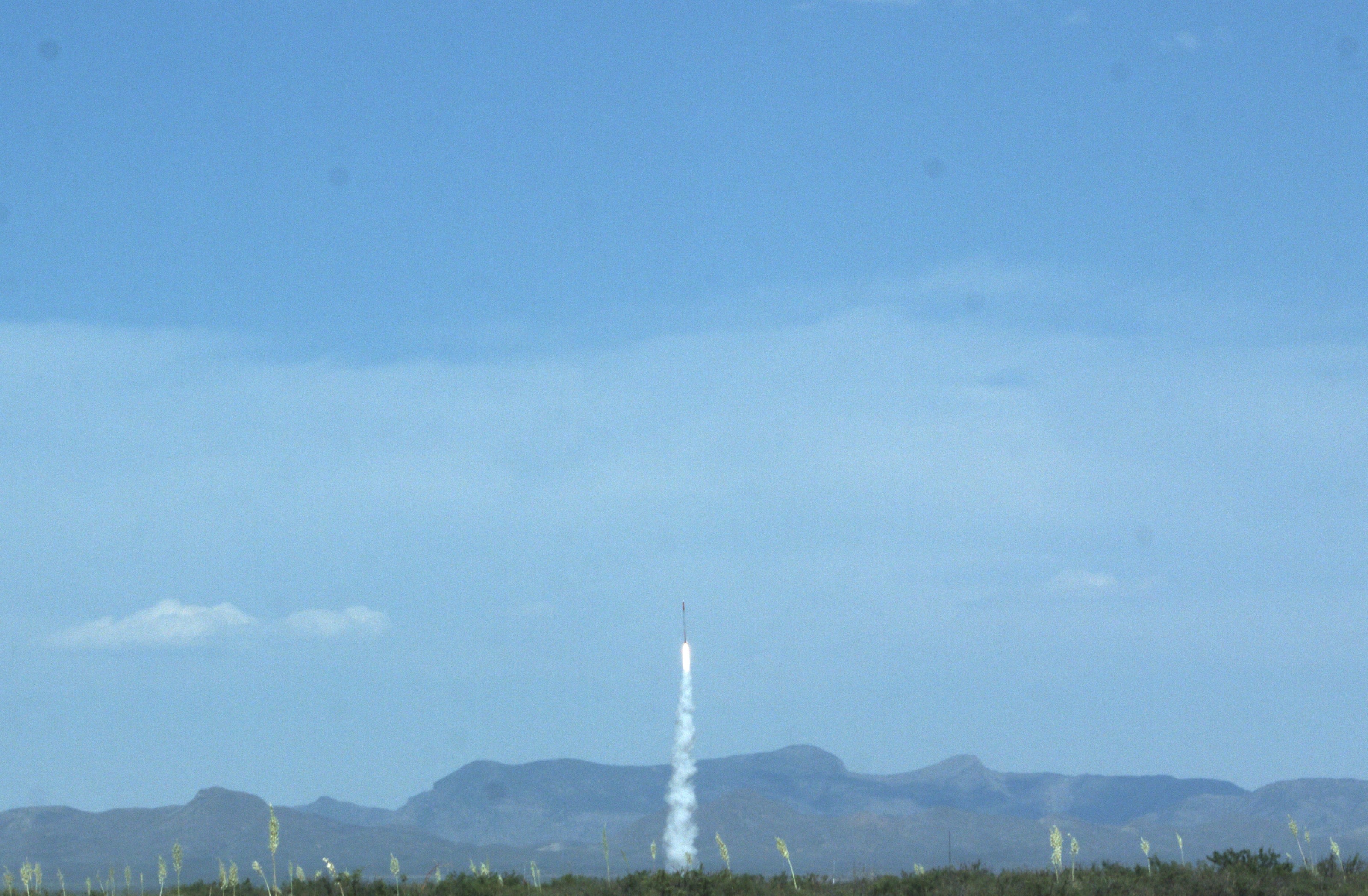
Intrepid after liftoff at Spaceport America Cup in 2023
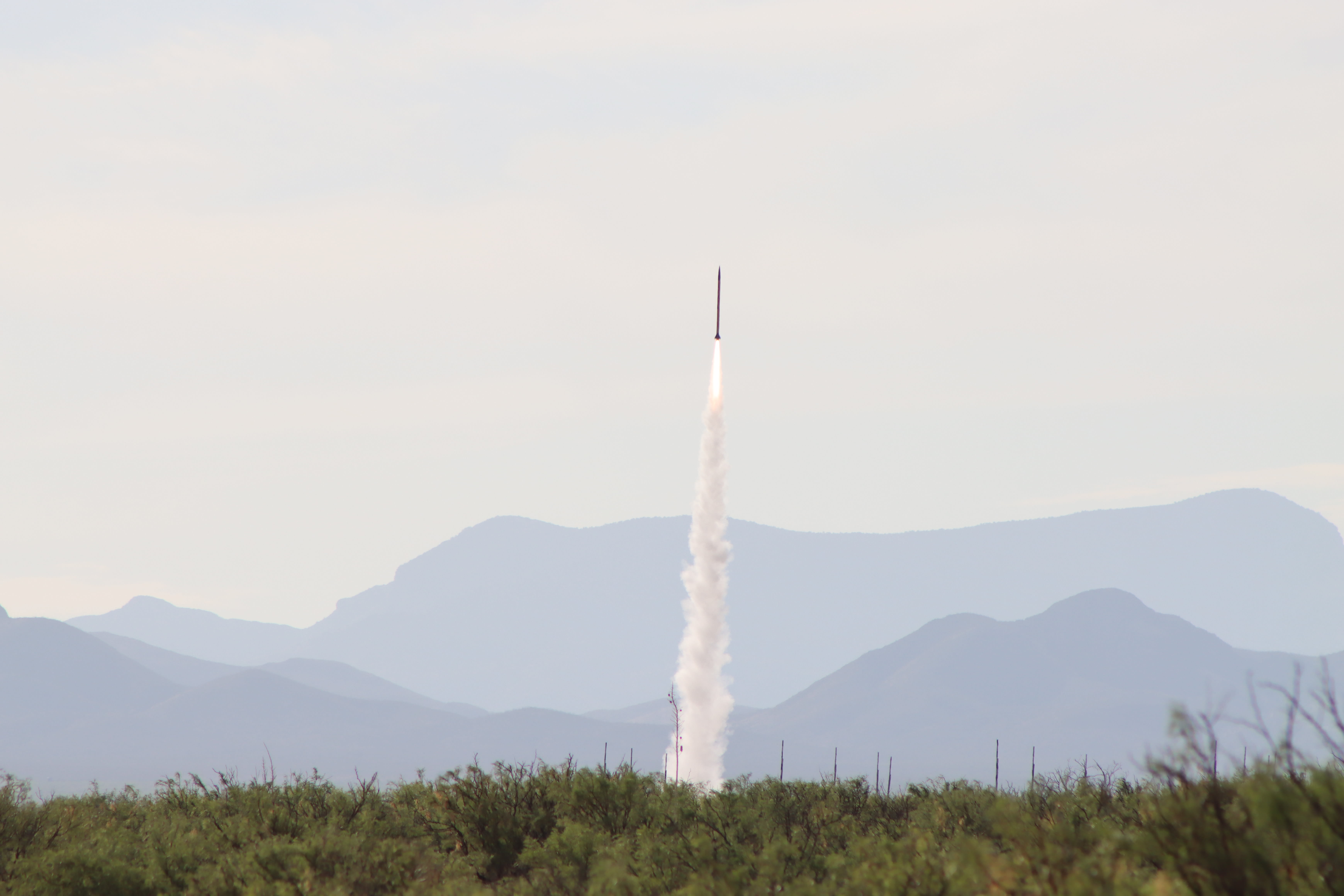
Vesta after liftoff at Spaceport America Cup in 2024
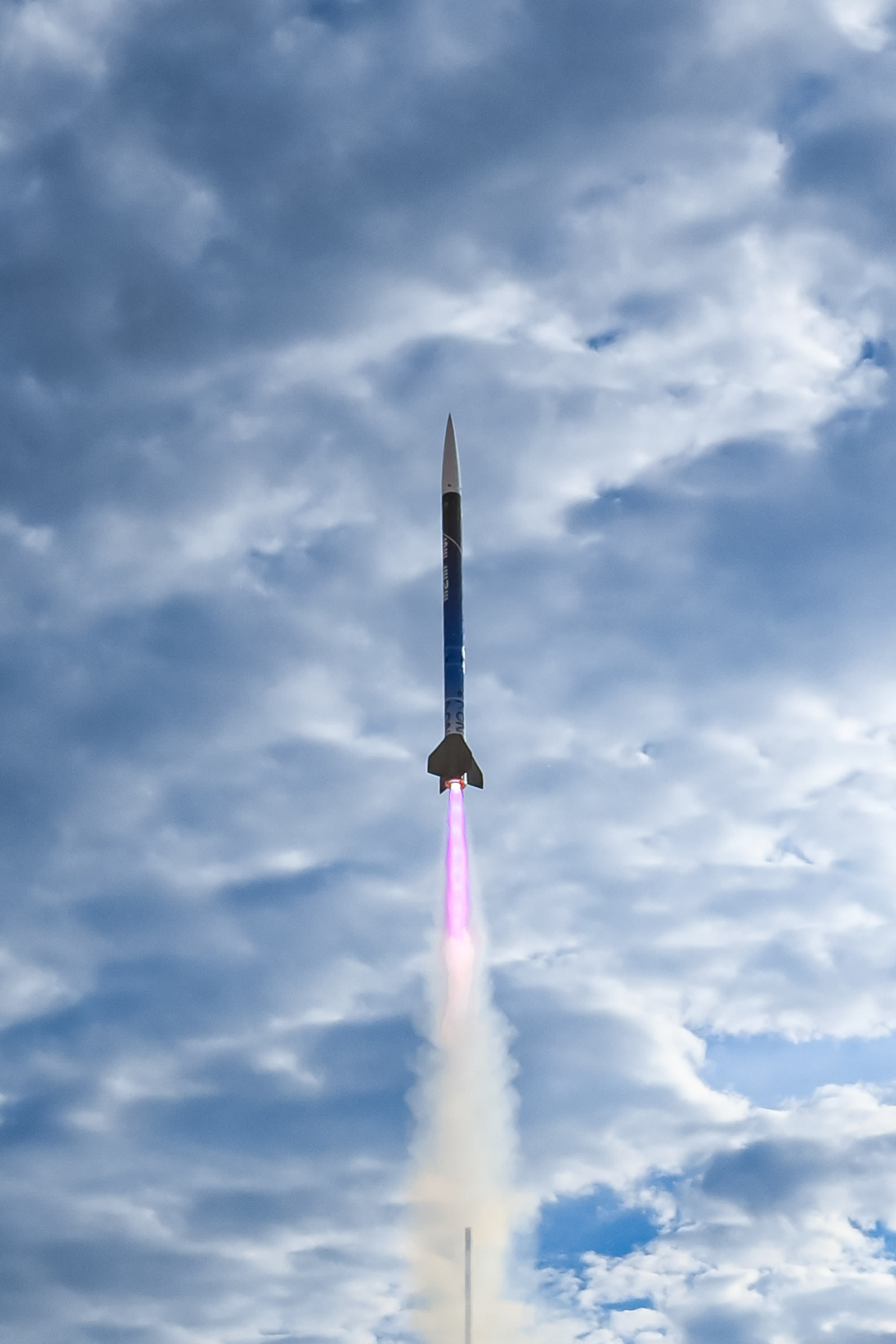
Selene after takeoff at IREC 2025
Hyperion
 CAD design of Hyperion
The mission of Hyperion is to fly to an apogee of 10,000 ft above ground level. The scoring at IREC 2026 will largely depend on our altitude accuracy and our ability to successfully recover the vehicle and its club-designed payload. Here are some technical details of this year's competition rocket.
- Height: 11'
- Airframe diameter: 6''
- Vehicle weight on the pad: 77 lb
- Maximum acceleration: 10.2 G
- Maximum velocity: 1156 fps / 1.054 Mach
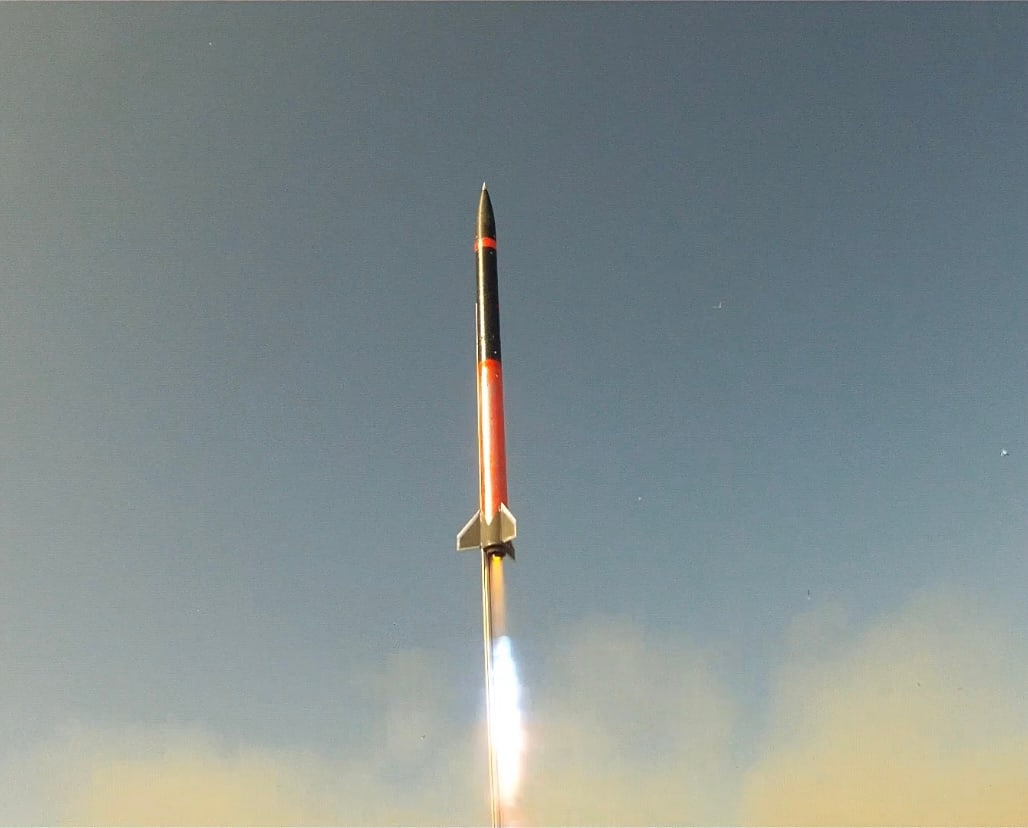
Test Platform launch testing multiple rocket subsystems
Hyperion is being built using a variety of student researched and designed (SRAD) technologies, which enable more customizable rocketry hardware while providing our members valuable design and manufacturing experience.
- Aerostructures: The airframe of the rocket consists of body tubes, nosecone, couplers, and fins. All components are made primarily of carbon fiber, with the exception of the fiberglass nosecone. The couplers and nosecone are produced with a female-mold vacuum bag technique. We utilize an X-Winder machine and vacuum bagging to produce body tubes with composite filament winding technology. The fins are secured to the body with a carbon fiber tip-to-tip layup.
- Avionics: The purpose of our SRAD avionics boards is to control the airbrakes in flight and log flight data. Both the physical boards and the flight software are student-made and read pressure and acceleration data to determine airbrake actuation. This year, we are using a multi-board design, where we have three sensor hubs independent from each other. Each hub is in charge of collecting the sensor data and sending it to our controller boards, which interface with the airbrakes. Our avionics data will be recorded locally and sent through our payload for in-flight telemetry. Avionics has also been working with the recovery team on a reefing device that allows one parachute to act as both a drogue and main parachute.
- Mechanical: Our objective at the IREC competition this year is to achieve an apogee of exactly 10,000 ft. Because it is hard to predict exactly how high a rocket will go based on the motor alone, we will purposely design our motor to overshoot the target altitude and use a variable drag system to lower our apogee. This variable drag system is called airbrakes and is currently being designed and manufactured by the mechanical subteam. This year, we are making significant design changes to the design to reduce friction within the airbrakes upon deployment. The mechanical subteam is also improving the piston design to make it safer and more efficient. Mechanical machines the airbrakes, piston, and all metal on the rocket in house.
- Payload: Each year a cubesat payload with a science experiment is launched with the rocket. This year, the payload includes an accelerometer and pitot tube to record flight velocity and pressure data. The goal is for this data to be used to improve rocket flight simulations so future simulations can more accurately predict the behavior of a rocket in flight.
- Propulsion: Our propulsion team is developing an SRAD hybrid motor for flight, building from the successful test fire last April. This year, the hybrid includes a sub-minimum diameter nitrous oxide tank and a 5" combustion chamber, which is an increase in size from last year. A hybrid motor also requires the development of ground support equipment to ensure a successful flight. A static fire of the new hybrid motor is upcoming this March!
- Recovery: The parachutes control vertical velocity while the rocket descends. This year, the recovery team is manufacturing an annular parachute, which is an upgrade from the cruciform geometry of previous years. A small subscale parachute was manufactured earlier this year to collect flight and wind tunnel data to improve drag calculations. The recovery team is working with the avionics team to integrate the reefing system into the parachute.
In addition to Baja Blast, our 10k test vehicle, we’ve expanded our testing capabilities by restoring and reflying past test vehicles. These tests allow us to evaluate individual subsystems and ensure both Baja Blast and Hyperion are set up for successful flights.
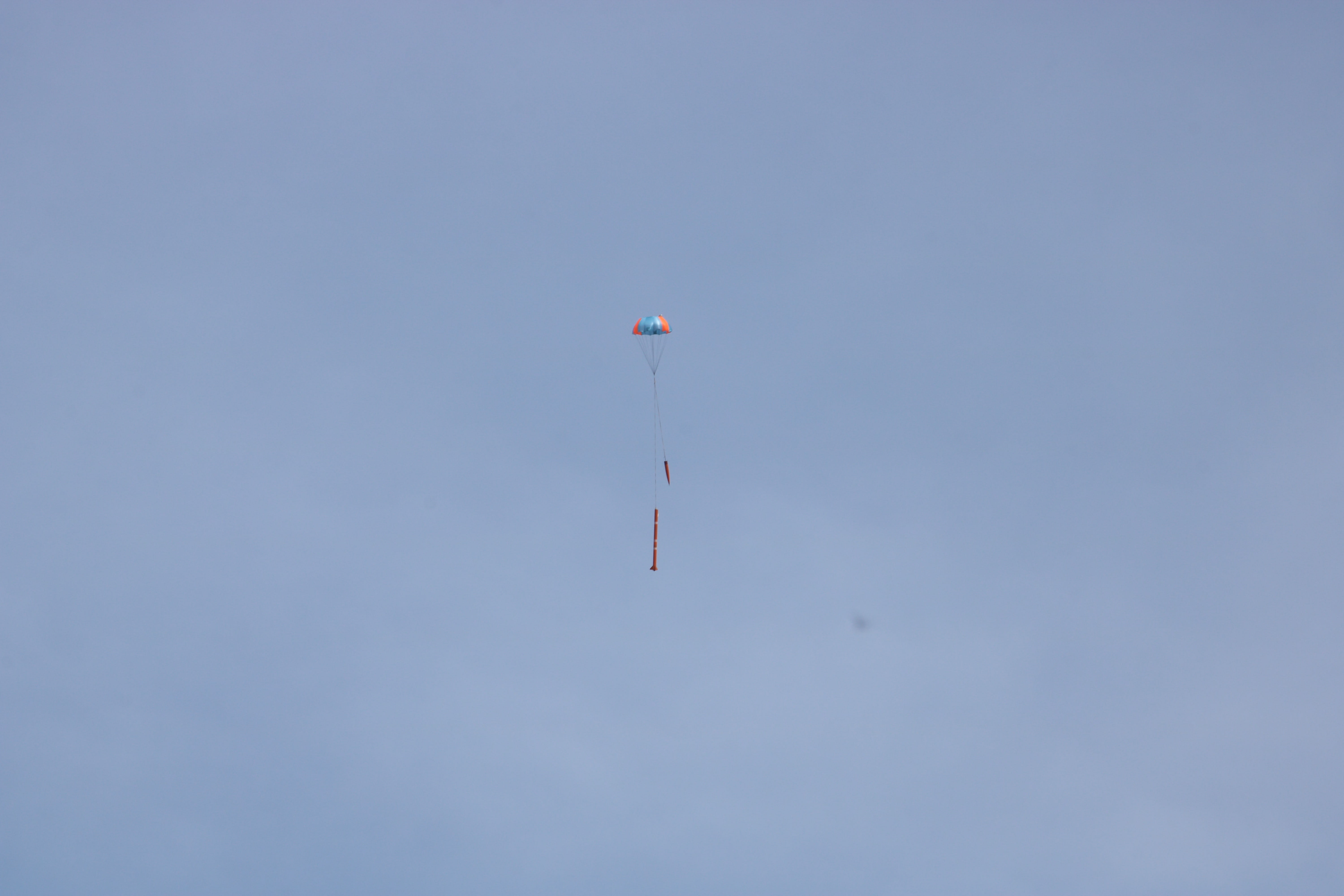
Test vehicle after a successful test of the parachute reefing system
Support Cyclone Rocketry
Cyclone Rocketry offers exceptional learning opportunities to its members. We are now in the manufacturing phase of the project, which involves purchasing all components necessary to make Hyperion a reality. We require support from generous donors to achieve our mission. Donations from this fundraiser will also support Cyclone Rocketry's return to IREC, which will be June 15-20, 2026 in Midland, Texas. Please read the benefits associated with the donation levels on the right side of this page. We are extremely grateful for your support!
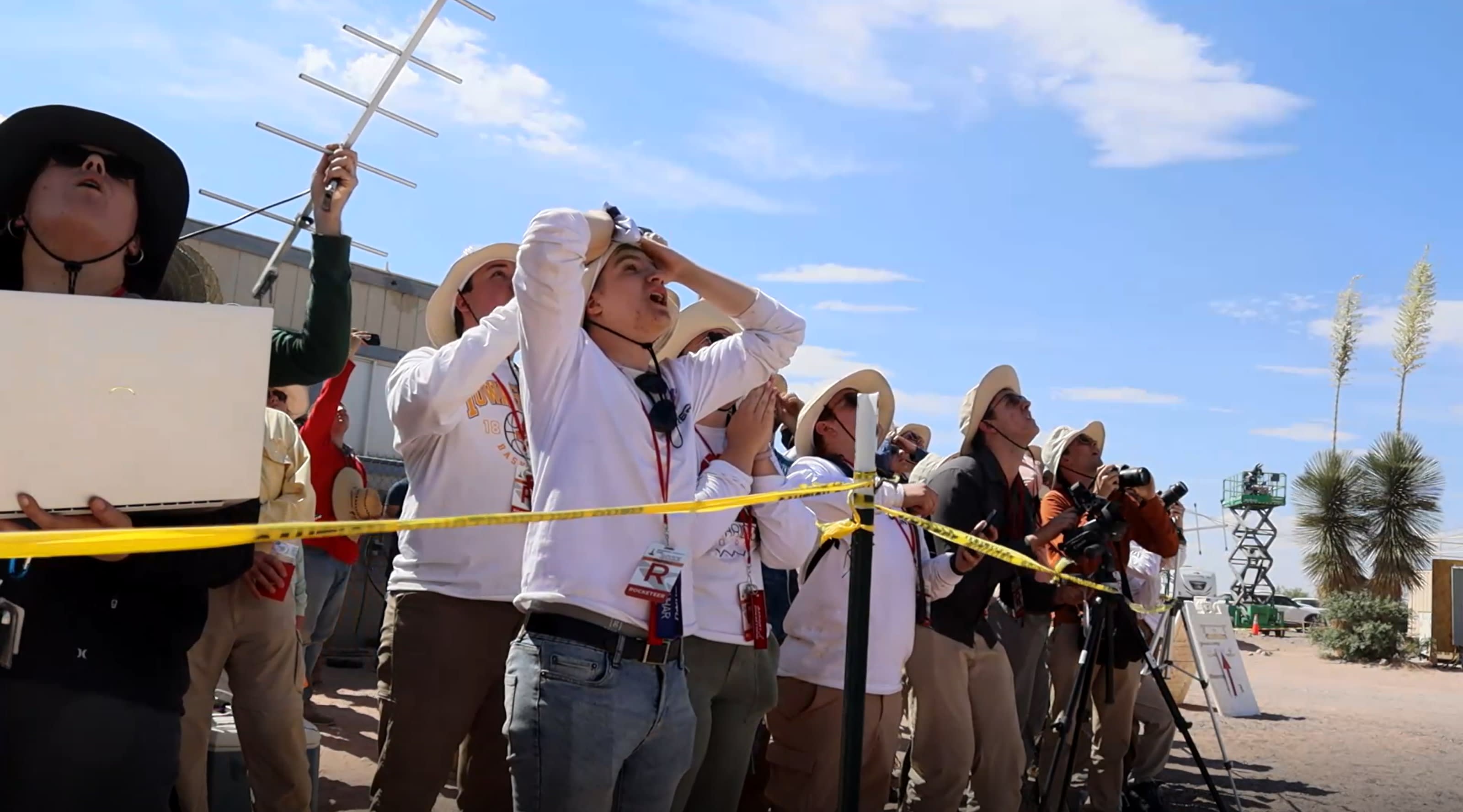
Team members watching Intrepid's launch at the 2023 Spaceport America Cup
